
Badshahi Mosque Lahore
Introduction: A Timeless Symbol of Mughal Grandeur
In the heart of Lahore, Pakistan, stands one of the most iconic and historically significant monuments of the Mughal era — the Badshahi Mosque. Known for its breathtaking beauty, intricate design, and cultural significance, the mosque is a proud symbol of Islamic architecture and Mughal legacy. Built in 1673 under the reign of Emperor Aurangzeb Alamgir, this mosque is not only one of the largest in the world but also one of the most visited tourist attractions in Pakistan.
For travelers, historians, and architecture enthusiasts, the Badshahi Mosque offers an unforgettable journey into history. To plan your visit and explore Pakistan’s timeless landmarks, Pakistan PTPC provides detailed guides, resources, and tourism information that will make your experience truly remarkable.
Historical Background of Badshahi Mosque
The Badshahi Mosque was commissioned in 1671 by the Mughal Emperor Aurangzeb, the sixth ruler of the Mughal dynasty, and was completed in 1673. It was constructed to celebrate the Mughal Empire’s power and devotion to Islam. At the time of its completion, it was the largest mosque in the world, capable of accommodating over 100,000 worshippers in its vast courtyard and prayer halls.
The mosque was also a political and cultural hub. It stood as a reminder of Mughal authority, especially since Lahore was a prominent city during the empire’s reign. Over the centuries, the mosque witnessed periods of neglect, particularly during the Sikh and British colonial rule, but it has been carefully restored to preserve its original magnificence.
Religious and Cultural Importance
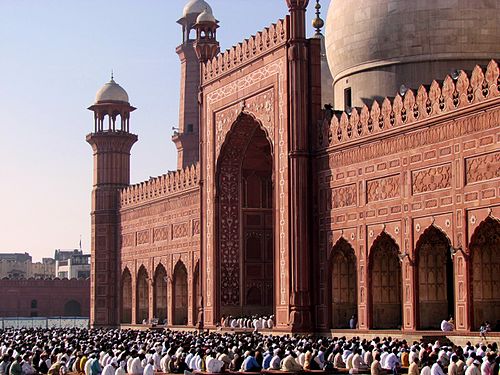
The Badshahi Mosque is not just an architectural masterpiece; it remains an active place of worship and cultural pride. Every Friday, thousands of worshippers gather here for Jumu’ah prayers. During Eid festivals, the mosque is filled with worshippers from across Lahore and beyond.
It also holds religious relics, including some believed to be associated with Prophet Muhammad (PBUH), making it spiritually significant for many Muslims.
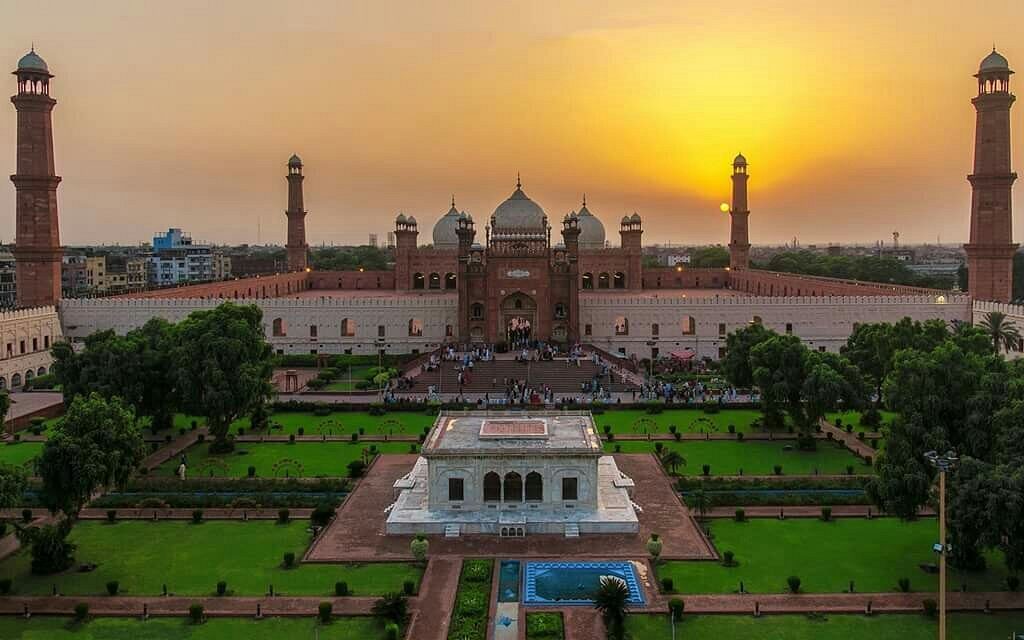
For tourists, the mosque represents more than a religious site. It is a cultural hub, often paired with visits to the Lahore Fort, which stands opposite the mosque, creating a grand historical complex.
Architectural Grandeur
Exterior Design
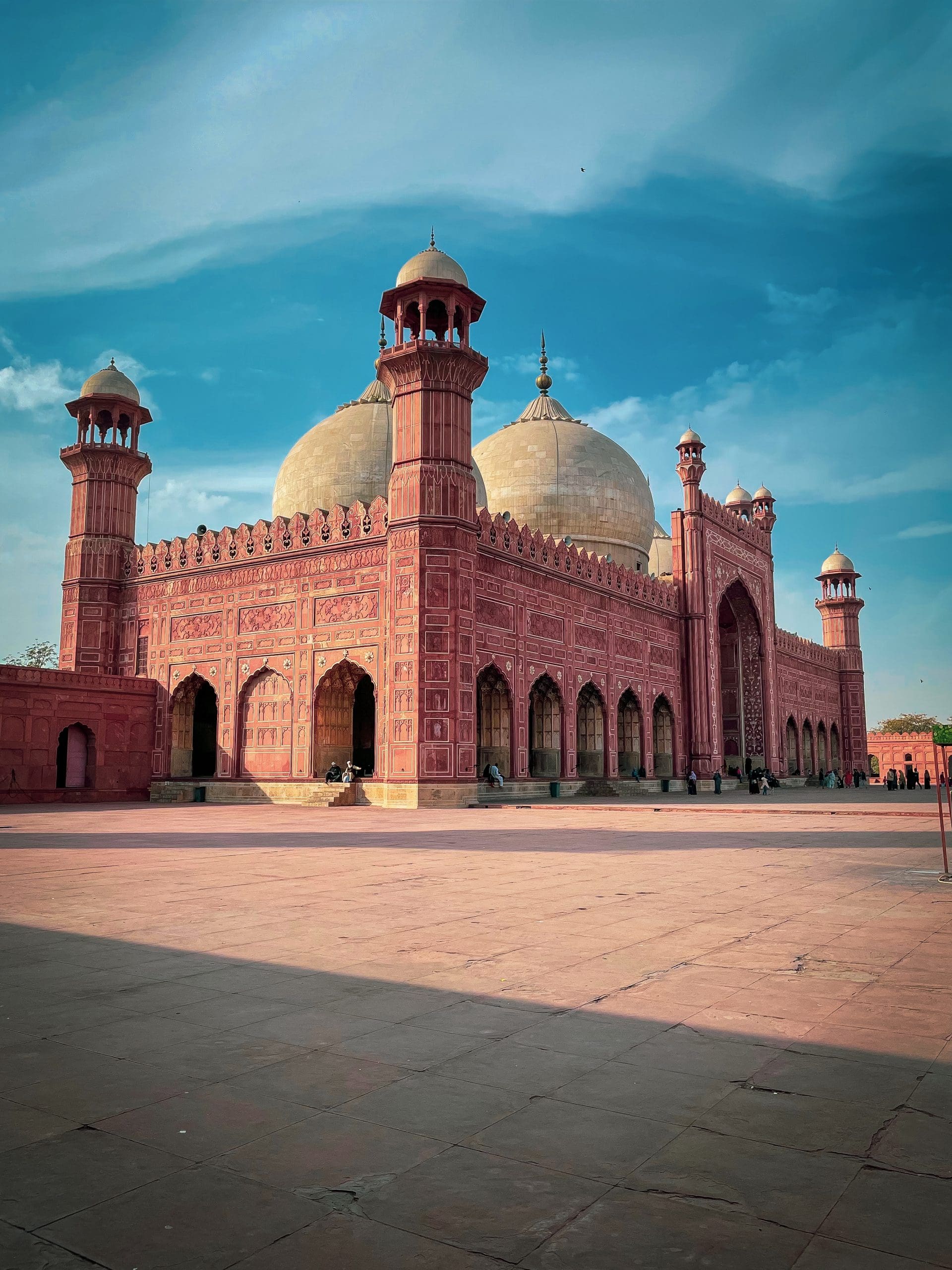
The Badshahi Mosque is built primarily from red sandstone, with marble inlays that enhance its majestic appearance. Its massive courtyard can hold around 55,000 people, making it one of the largest courtyards in any mosque in the world. Four towering minarets, each standing 176 feet tall, guard the corners of the mosque, while the three grand marble domes add an unparalleled beauty to the skyline of Lahore.
Interior Beauty
Inside the mosque, intricate fresco paintings, Islamic calligraphy, and detailed stucco work cover the walls and ceilings. The prayer chamber features a beautifully decorated mihrab, while the domes are adorned with delicate designs that reflect the artistry of Mughal craftsmen.
Symbolism of the Mosque
The mosque’s scale and beauty symbolize both Mughal devotion to Islam and their architectural innovation. The mixture of Persian, Central Asian, and Indian styles reflects the empire’s cultural richness.
The Mosque Through History
Mughal Period
During its early years, the mosque was a center for religious learning and ceremonies. Its vast size made it a symbol of Aurangzeb’s reign, projecting Mughal authority across the region.
Sikh and British Era
When the Sikhs took control of Lahore in the 18th century, the mosque was misused as a military garrison. Later, under British rule, it was also used for military purposes. This period led to severe damage and neglect of the mosque’s structure and sanctity.
Restoration Efforts
In 1852, during British colonial rule, the mosque was handed back to Muslims, and restoration began. Since then, several efforts have been made to restore it, including significant work during the 20th century. Today, the Badshahi Mosque stands as a restored heritage site, carefully preserved for future generations.
Badshahi Mosque as a Tourist Attraction
A Must-Visit in Lahore
Lahore, often called the cultural heart of Pakistan, draws thousands of visitors each year, and the Badshahi Mosque is its crown jewel. Whether you are exploring history, admiring architecture, or capturing photographs, the mosque provides a memorable experience.
Visiting Experience
- Location: Right opposite the Lahore Fort in the Walled City of Lahore.
- Best Time to Visit: Evening or early morning, when the mosque glows beautifully in natural light.
- Cultural Etiquette: As it is an active place of worship, visitors are expected to dress modestly and respect prayer times.
For tourists looking to discover more about Lahore and its surrounding landmarks, Pakistan PTPC offers detailed itineraries and guides.
Badshahi Mosque in Modern Times
Today, the Badshahi Mosque is not only a place of worship but also a UNESCO tentative heritage site. It serves as a venue for cultural events, religious gatherings, and international tourism.
Its popularity has increased with improved infrastructure and cultural programs in Lahore, making it one of the most photographed and visited landmarks in Pakistan.
Why the Badshahi Mosque is a Symbol of Pakistan
The mosque represents Pakistan’s identity in multiple ways:
- Religious Symbolism: As one of the largest mosques in the Muslim world, it symbolizes the Islamic heritage of the region.
- Architectural Heritage: Its Mughal design connects Pakistan with a rich cultural past.
- National Pride: Featured on coins, literature, and media, the mosque serves as a symbol of Pakistan’s resilience and pride.
Travel Tips for Visitors
- Plan a Guided Tour: A local guide can enrich your experience with historical anecdotes.
- Visit Nearby Attractions: Combine your visit with Lahore Fort, Hazuri Bagh, and the Shalimar Gardens.
- Photography: Sunset views are particularly stunning from the mosque’s courtyard.
- Respect Local Traditions: Remove shoes before entering, and avoid photography during prayer times.
For more comprehensive travel tips, check Pakistan PTPC, where you’ll find authentic guidance on exploring Lahore’s heritage.
The Badshahi Mosque is more than just a religious site; it is a timeless monument of Mughal magnificence, Islamic devotion, and Pakistani pride. From its red sandstone exterior to its spiritual atmosphere, every corner of the mosque tells a story of history, culture, and faith.
Whether you are a historian, traveler, or simply an admirer of great architecture, a visit to this mosque is an experience that stays with you forever. For those planning their journey to Lahore and other destinations in Pakistan, Pakistan PTPC is your reliable companion, offering detailed resources to make your trip unforgettable.